

BLOG ARTICLE
Commercial HVAC Replacement: Repair or Replace?
Brandon Keen
A Practical Guide to Repair Costs, Energy Savings, and Keeping Your Business Comfortable.
Quick Answers
Should you repair or replace your commercial HVAC system? Repair usually makes sense when the problem is isolated, the equipment is otherwise in good condition, and the repair offers dependable service at a reasonable cost. Commercial HVAC replacement deserves serious consideration when breakdowns keep happening, major repairs are stacking up, or the system no longer meets your building’s needs.
Does older equipment automatically need replacing? No. Age is one factor... Not a diagnosis. Condition, maintenance history, parts availability, operating costs, and the consequences of another failure all matter.
Can a new commercial HVAC system lower energy costs? Yes, properly selected and installed equipment can reduce energy use compared with a less-efficient system. Actual savings depend on the equipment, building, operating hours, controls, and installation—not just the efficiency rating on the brochure.
What should you do before approving either option? Request a diagnosis and a written comparison of repair and replacement, including the full project scope, expected performance, and installation schedule.
When Your HVAC System Becomes Your Most Demanding Employee
It complains. It takes unexpected breaks. And somehow, it always needs attention on your busiest day.
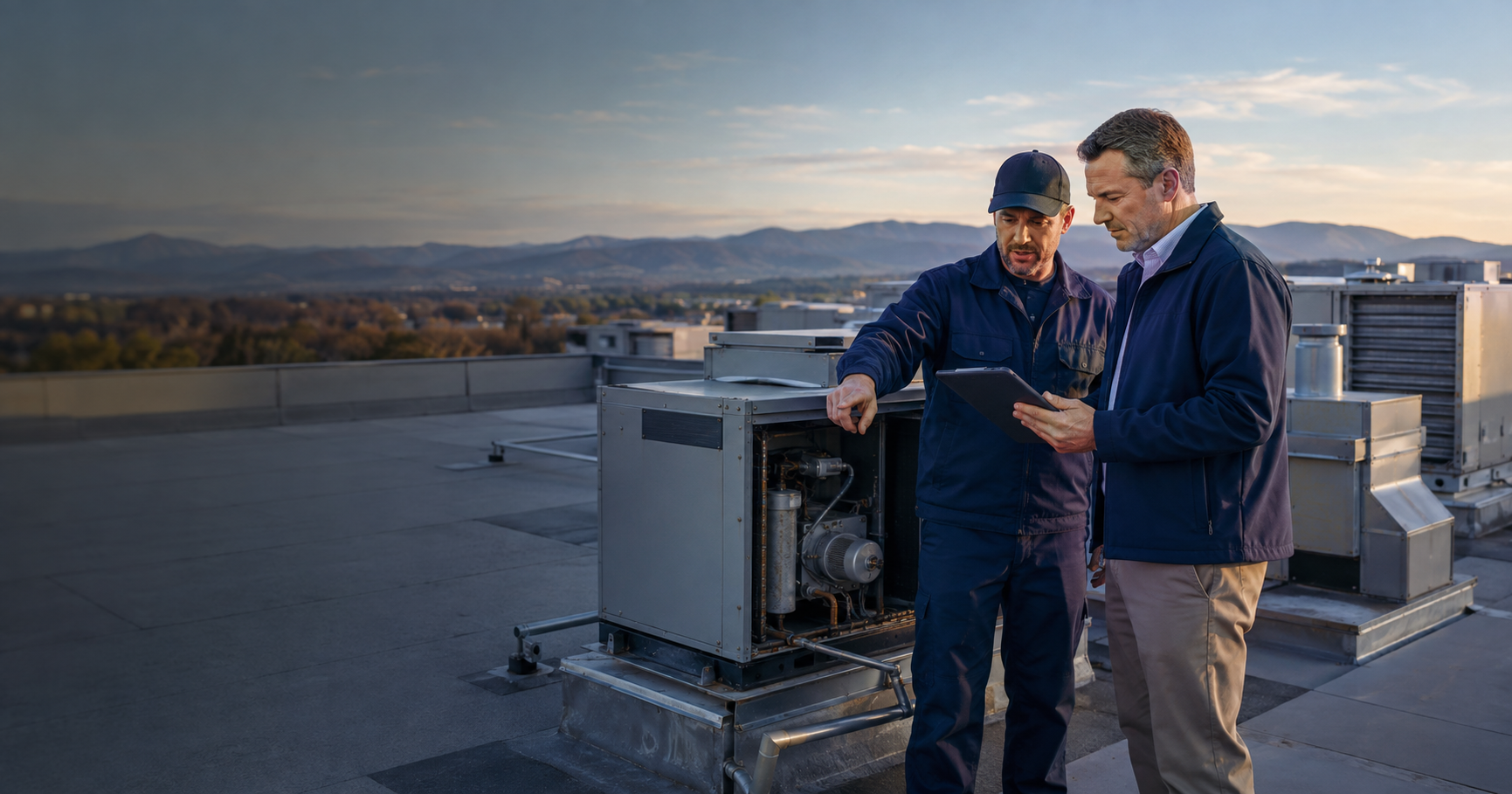
Unlike an employee, your rooftop unit cannot explain what is wrong over a cup of coffee. That leaves you with a familiar business-owner question: “Can we just fix it?”
Sometimes, absolutely.
At Phil’s Heating & Air, we believe a repair that genuinely solves the problem deserves a fair look. We also believe you should know when another repair is buying a little time instead of delivering good long-term value.
For businesses in Johnson City, Kingsport, Bristol, Gray, and the surrounding Tri-Cities Region, the right answer starts with understanding the whole system, not simply choosing the smaller number on today’s estimate.
When Commercial HVAC Repair Makes Sense
A breakdown does not automatically mean your equipment is ready for retirement.
Repair may be the sensible choice when:
- The problem is specific and repairable. A failed component does not necessarily mean the entire system is worn out.
- The rest of the equipment is in good condition. An assessment should consider more than the part that stopped working.
- The system has been dependable. One repair is different from a growing collection of service invoices.
- It still meets your building’s needs. Before the failure, the equipment maintained appropriate temperatures and served the space effectively.
- Warranty coverage improves the economics. Confirm which parts and labor are covered before comparing costs.
- Your occupancy plans favor a shorter-term solution. A lease ending soon may change the decision, especially if the landlord owns the equipment.
The key question is not simply, “Can this be repaired?”
It is, “What are we getting for the money, and what problems remain afterward?”
A targeted repair can be an excellent investment. A repair that leaves several expensive issues unresolved deserves a longer conversation.
When Commercial HVAC Replacement Makes More Sense
Replacement becomes more compelling when several warning signs appear together.
The repair history keeps growing. Review the last few years of invoices. Are you dealing with occasional maintenance needs or repeated failures that interrupt business?
A major repair is only part of the picture. An expensive component replacement may be worthwhile in an otherwise sound system. It is a tougher sell when other major components are also deteriorating.
Comfort problems never really go away. If one area is too warm while another could store ice cream, investigate the cause. Equipment capacity, ductwork, controls, and airflow all deserve attention. Replacing the unit alone may not solve a distribution problem.
Your building has changed. More employees, new partitions, longer operating hours, or heat-producing equipment can change what the HVAC system needs to deliver.
Another breakdown would be especially disruptive. Consider which spaces the equipment serves and what happens if those spaces lose heating or cooling.
Parts availability makes repairs difficult to plan. Ask about actual availability and lead times for your specific equipment rather than assuming every older unit is impossible to service.
None of these signs should trigger an automatic sales pitch. Together, however, they can make a strong case for getting a commercial HVAC replacement proposal before the next emergency makes the schedule for you.
Explore PHA’s commercial HVAC services for help comparing repairs, replacement, and installation options.
Look Beyond the Repair Bill
A repair estimate is one number. The cost of keeping the equipment is a bigger conversation.
Ask for a comparison over the same ownership period that includes:
- The immediate repair or installed replacement cost.
- Expected maintenance and future repairs.
- Estimated energy costs.
- Potential disruption to your business.
- Warranty coverage and exclusions.
- How long do you expect to occupy the property?
Money already spent on repairs cannot be recovered. Those invoices are useful evidence of reliability—not a reason to keep spending just because you have “already put so much into it.”
Likewise, replacement should not win simply because someone promises it will “pay for itself.” Ask what assumptions support that claim.
Illustrative example: If two replacement options differ by $3,000 and the higher-efficiency option is estimated to save an additional $600 annually, the simple payback on that efficiency upgrade is five years. That is an example, not a PHA quote or savings guarantee, and it does not account for financing, changing energy rates, or maintenance differences.
It also answers a different question from whether you should replace a working system at all. Keep those comparisons separate.
What Can a New Commercial HVAC System Improve?
The strongest replacement proposal connects the equipment to problems your business actually needs solved.
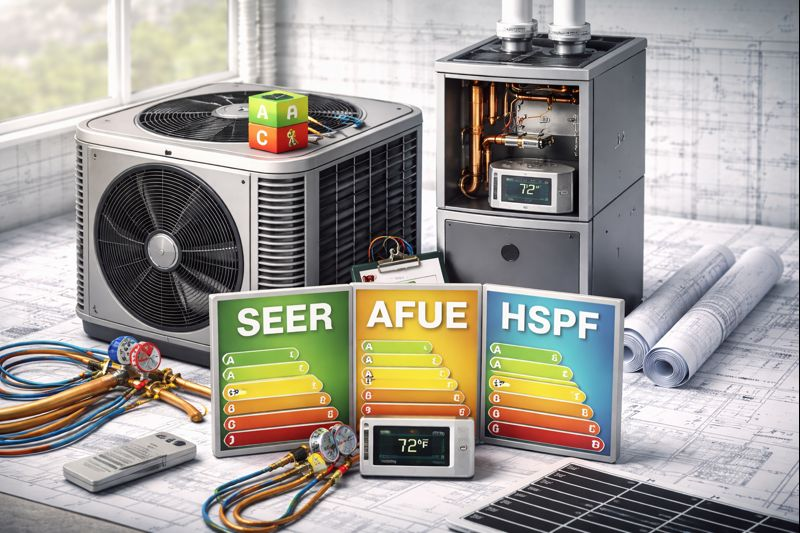
Energy efficiency. In one published commercial air-conditioner comparison, the U.S. Department of Energy lists annual energy use of 24,722 kWh for a less-efficient model and 22,250 kWh for an ENERGY STAR model—about 10% less under the example’s assumptions. That illustrates why efficiency matters, but it is not a prediction for your building or a 10% reduction in your total utility bill. See the DOE’s commercial equipment purchasing guidance.
A better fit for your business. Replacement is an opportunity to evaluate current heating and cooling needs instead of automatically installing the same capacity again.
Improved comfort and control. Depending on the design, updated equipment and controls may offer better scheduling, temperature management, and humidity performance. Ask which improvements are actually included in the proposal.
A more planned approach to reliability. New equipment is not failure-proof. However, replacing deteriorating equipment gives you an opportunity to address known problems and establish a maintenance plan from the start.
New warranty coverage. Review the actual commercial warranty. Parts, labor, registration requirements, and exclusions can differ.
The goal is not merely a newer box. It is a system that works better for the people and business(es) inside the building.

What Are the Tradeoffs of Replacing Commercial HVAC?
Let’s address the obvious: a new commercial HVAC system is a significant purchase.
But the equipment price is not the only item to plan for. Ask about:
- Equipment delivery and installation timing.
- Temporary interruptions to heating or cooling.
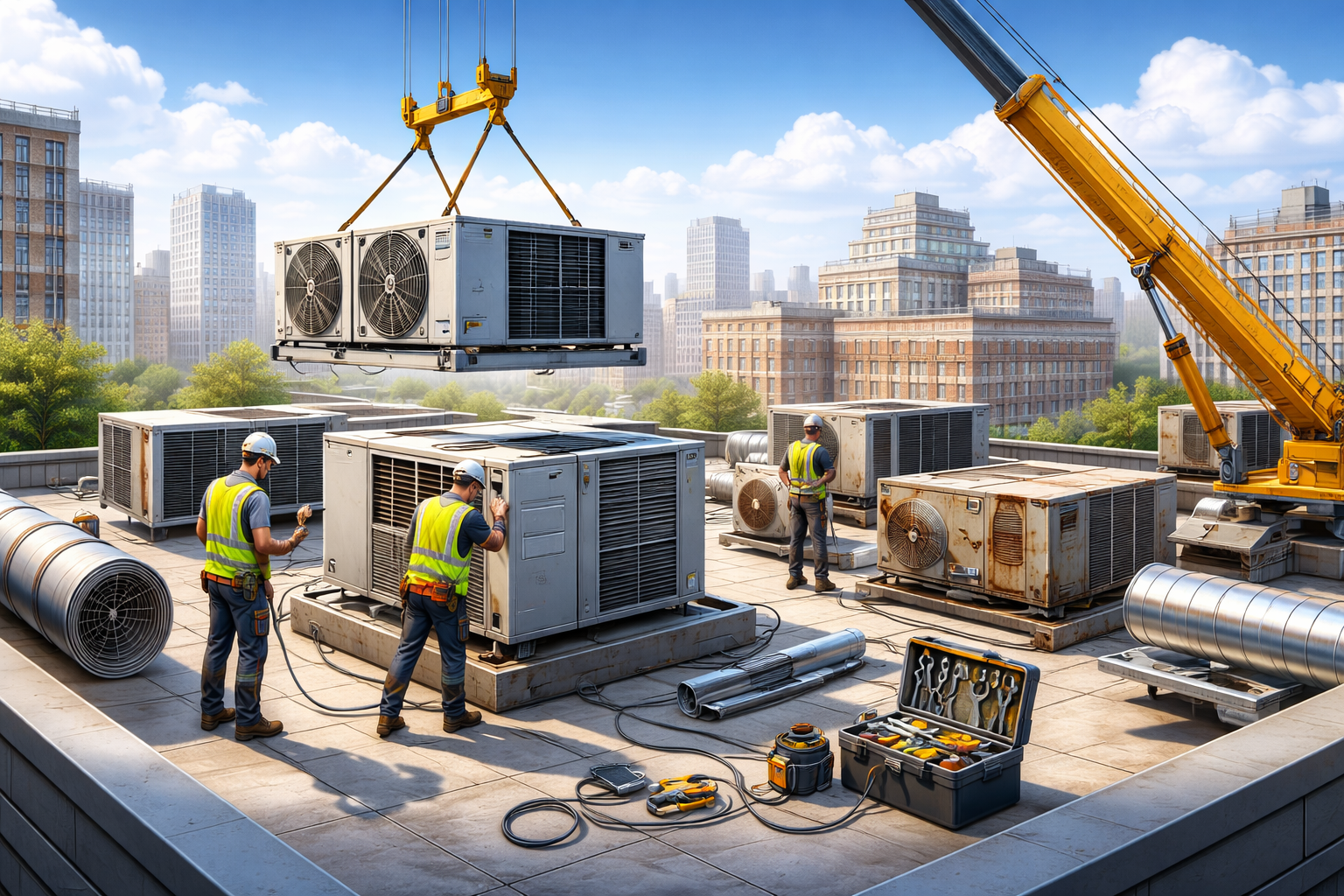
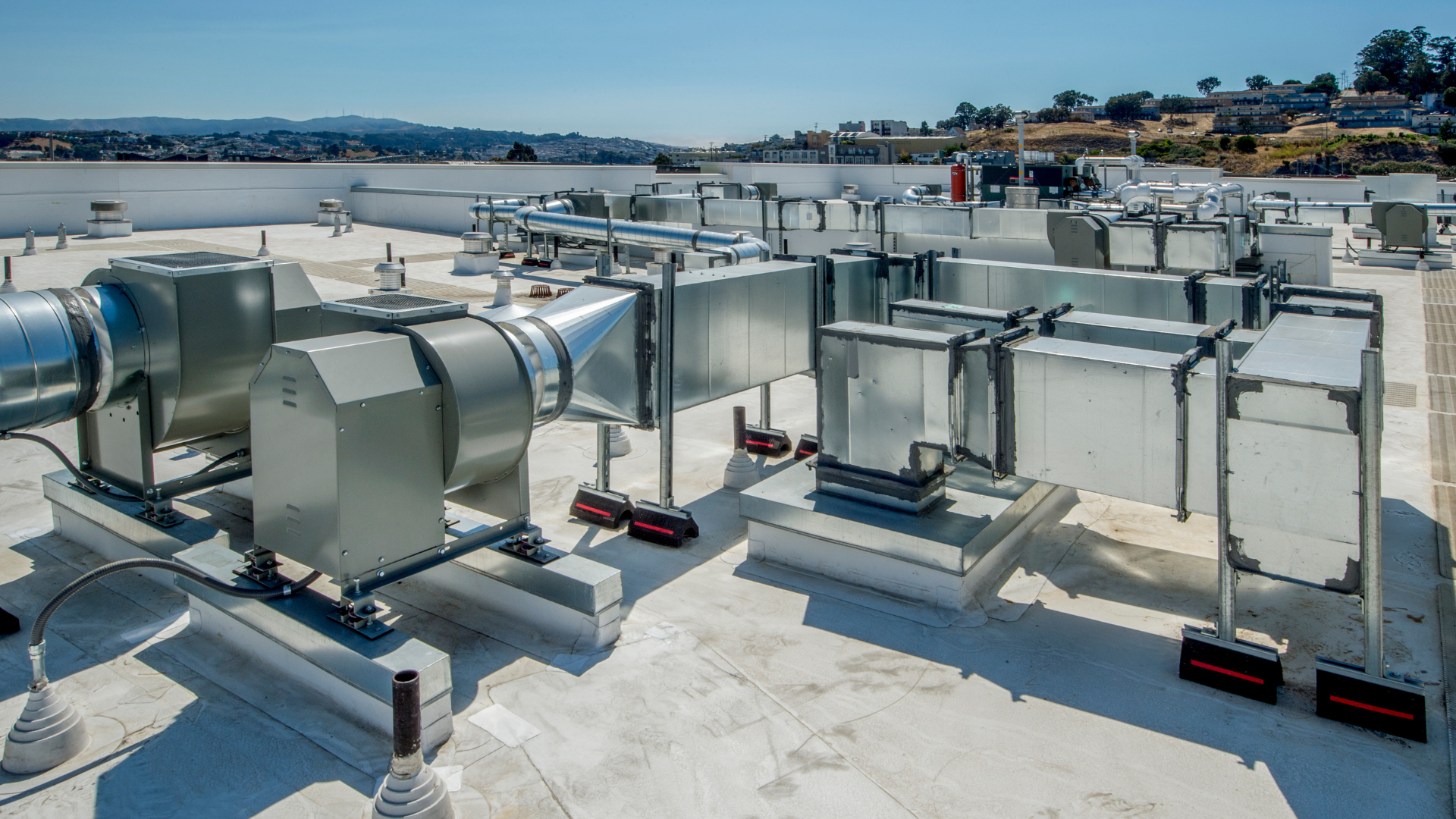
- Rooftop access and crane work, where applicable.
- Possible electrical, ductwork, roof-curb, or controls modifications.
- Permits, testing, and startup responsibilities.
- Ongoing maintenance requirements.
Not every project needs every item. The important thing is knowing what your building requires before work begins.
A clear proposal should explain what is included, what is excluded, and how the installation will be coordinated with your operations.
Nobody enjoys a surprise expense. Especially one delivered by crane.
Commercial and Industrial Buildings Need Different Questions
An office, restaurant, warehouse, and manufacturing facility should not receive the same replacement recommendation simply because they have similar square footage.
Before requesting an estimate, be ready to explain:
- What happens in the building.
- When it is occupied or operating.
- Which areas have persistent comfort problems.
- Whether machinery or processes generate heat.
- Whether the layout or use has changed.
- Which spaces cannot tolerate an extended interruption.
For industrial projects, distinguish general space conditioning from process-specific cooling, exhaust, or environmental requirements. Those needs should be identified early and evaluated by the appropriate professionals.
PHA’s industrial HVAC services address the needs of larger facilities, warehouses, and manufacturing environments. A useful assessment starts with how your facility operates—not just the model number on the existing unit.
Bring These Five Things to Your HVAC Assessment
A little preparation can make the repair-versus-replace conversation much more productive.
Recent service records: Include recurring problems and previous recommendations.
- Utility bills: Ideally, gather at least a full year so seasonal changes are visible.
- Equipment information: Share available model numbers, installation dates, and warranty documents.
- A comfort complaint list: Note where problems occur and at what time of day.
- Your business plans: Mention renovations, expansion, lease timing, or changes in operating hours.
You do not need to climb onto the roof to gather information. Share what you already have and leave equipment access and inspection to the professionals.
Also ask whether preventive HVAC maintenance or a targeted correction could address the problem before committing to replacement.
Commercial hvac
FAQ
Frequently Asked Questions About Commercial HVAC Replacement
Should I replace my commercial HVAC system based on age alone?
No. Age helps frame the discussion, but equipment condition and performance are more useful than a birthday. Have the system evaluated before approving a major repair or replacement.
Should I replace it when the repair costs half as much as a new system?
That can be a prompt to compare options, but it is not a universal rule. Consider the complete installed replacement cost, remaining condition of the existing system, warranty coverage, and expected future expenses.
Will a new unit fix uneven temperatures?
Not necessarily. Uneven temperatures may involve ductwork, airflow, controls, or building conditions. Those issues should be diagnosed so the replacement scope addresses the actual cause.
Do all the rooftop units need replacing at once?
Not automatically. Ask whether a phased approach is practical based on each unit’s condition, the areas it serves, and how the systems interact. Prioritizing the highest-risk equipment may help spread out the investment.
Does a higher energy bill prove the system needs replacing?
No. Weather, utility rates, occupancy, and operating hours can also affect costs. Compare those factors and investigate equipment performance before blaming the entire increase on the HVAC system.
Get an Honest Answer... and a Plan That Makes Sense
If a repair will solve the problem and deliver good value, we will explain that option. If commercial HVAC replacement is the stronger investment, we will show you why and walk through the costs, benefits, and project requirements.
Phil’s Heating & Air helps Tri-Cities businesses with commercial HVAC repairs, replacement, and installations. You deserve a recommendation based on your building and your priorities, not a one-size-fits-all pitch. Your business already has enough moving parts. Let’s make sure the HVAC ones are pulling their weight. Request your commercial HVAC assessment or call (423) 741-5459.
SHARE THIS BLOG POST
MORE HVAC TIPS & TRICKS
Related BLOG Articles






Repair vs. Replace Your HVAC System in 2026: The Hidden Costs East Tennessee Homeowners Need to Know